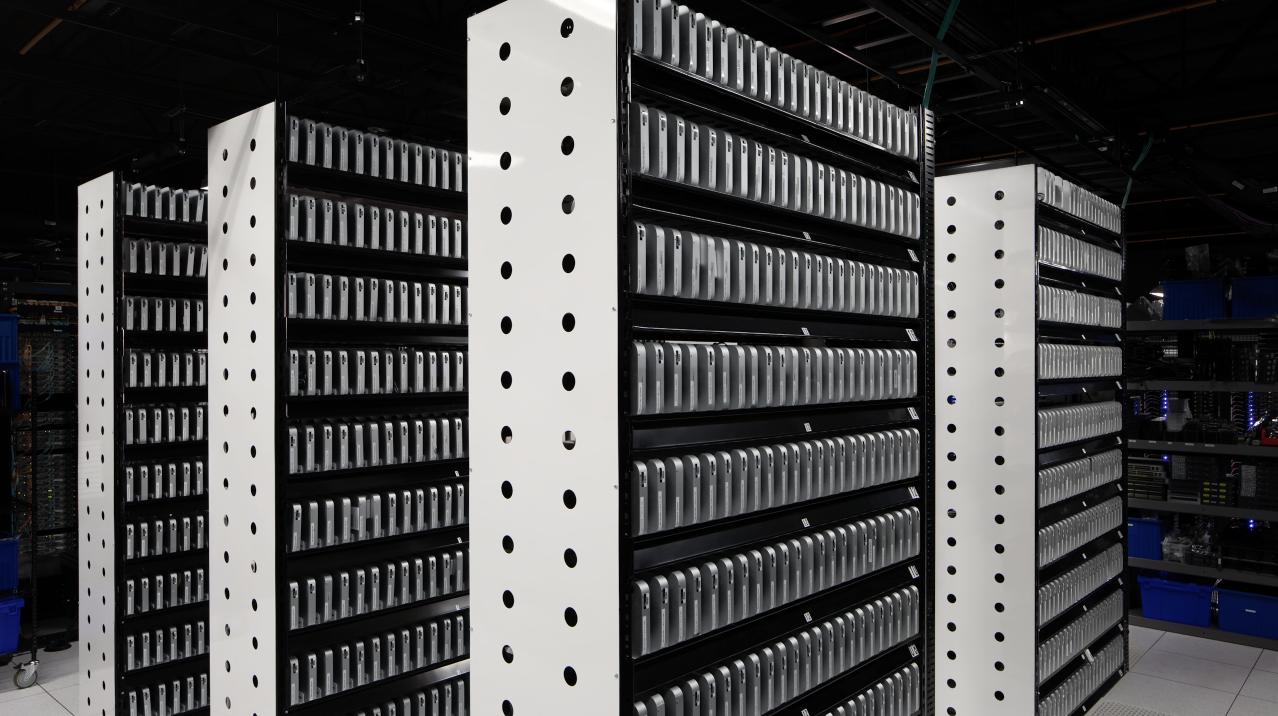
More and more education providers are exploring their own AI tutors. The technical barrier has dropped, open-source models like Llama are freely available, and powerful hardware seems more affordable than just a few years ago.
The obvious question therefore is:
Why should we pay monthly API costs to OpenAI or Anthropic when we can host a large language model ourselves?
At first glance, a self-hosted LLM looks like the more cost-effective solution. But anyone who realistically calculates the actual AI server costs, ongoing operating costs, and quality differences often arrives at a different conclusion.
That's exactly where our LLM cost calculator for education providers comes in.
What does "self-hosting an LLM" actually mean?
When people talk about a "self-hosted LLM," they typically mean:
- Your own on-premises server
- A Mac Mini running Llama
- Full data control
- No ongoing token costs
Technically, this is possible. Economically, it's more complex.
A large language model requires significant computing resources. The decisive factor is the available VRAM on the GPU. For smaller models like Llama 3 8B, an RTX 4090 with 24 GB VRAM may be sufficient. However, anyone who wants to achieve answer quality at GPT-4 level needs significantly larger models like Llama 3 70B — and therefore professional server hardware.
This is where the gap between theory and practice begins.
The real hardware costs of an AI server
Many calculations only account for the purchase cost of a GPU. But a productive AI tutor requires a stable infrastructure.
A solid setup in the education sector requires:
- High-performance GPU(s) with sufficient VRAM
- Powerful CPU
- 64–256 GB RAM
- NVMe storage
- Redundant power supply
- Professional cooling
- Monitoring and backup systems
For smaller models, the investment quickly reaches €4,000–6,000.
For larger models with multiple GPUs or enterprise hardware, we're looking at €60,000–80,000.
This sum needs to be amortized over several years. In practice, our calculator assumes a 36-month depreciation period.
But even that doesn't complete the picture.
Ongoing operating costs: the underestimated factor
The biggest misconception in the "cloud vs. on-premise AI" decision lies in ongoing operations.
An AI server doesn't only run when students are learning. It must be continuously available. This means:
- Power consumption between 400 and 1,500 watts in continuous operation
- Additional cooling costs
- Maintenance and driver updates
- Model optimization
- Security updates
- Monitoring
- Backup strategies
- Contingency plans for outages
But above all, internal staff time is required.
A self-hosted LLM requires continuous attention. Even by conservative estimates, 10–25 hours of IT work per month are needed. At a realistic internal hourly rate, this quickly adds up to several hundred to over a thousand euros per month.
These ongoing AI operating costs are simply left out of many presentations.
Scalability: the strategic difference
Another key point is scalability.
When an AI tutor is successful, usage increases. 5,000 requests per day become 15,000 or 30,000.
With a cloud solution, costs scale linearly with usage. No restructuring is required.
With a self-hosted solution, growth means:
- New GPUs
- New servers
- New investments
- New architecture planning
The scaling risk lies entirely with the education provider.
The quality factor is often ignored
A common misconception goes:
"Open-source models are now just as good as GPT."
In many benchmarks, modern open-source models are impressive. But in a didactic context, it's not just about facts — what matters is:
- Precision in complex explanations
- Consistency in long dialogues
- Didactic structure
- Error minimization
- Hallucination rate
- Language quality
For AI tutors in particular, the quality of answers directly affects learning outcomes and student satisfaction.
Anyone who self-hosts a lightweight LLM may save costs, but trades quality for infrastructure control.
Our calculator therefore considers not only costs, but also the target quality level.
Example calculation: 10,000 chat requests per day
Consider a typical education provider:
- 10,000 tutor requests per day
- Average of 1,500 tokens per interaction
- Approximately 450 million tokens per month
In the cloud model, only usage-based costs arise. There is no upfront investment, no hardware commitment, no operational risk.
With a self-hosted solution of comparable model size, you face:
- High initial investments
- Ongoing electricity costs
- Staff costs
- Scaling risks
The closer you want to get to state-of-the-art model quality, the more the supposed cost advantage of self-hosting disappears.
Why we built the LLM cost calculator
In conversations with universities, academies, and training providers, we repeatedly encounter the same assumption:
"Self-hosting is cheaper."
This statement is only correct under certain conditions:
- Very high, consistent usage volumes
- An in-house ML engineering team
- Existing server infrastructure
- A clear long-term AI strategy
For many education providers, this simply doesn't apply.
That's why we developed an interactive AI infrastructure cost calculator. It calculates:
- Total Cost of Ownership (TCO)
- Break-even point
- Hardware requirements
- Electricity and staffing costs
- Token-based cloud costs
- Scaling scenarios
The result is not a blanket recommendation, but a solid basis for decision-making.
When does self-hosting an LLM actually make sense?
Self-hosting can be worthwhile when:
- Data privacy requirements are extremely high
- Very large usage volumes are planned
- A dedicated AI infrastructure team is in place
- Strategically building internal AI expertise is a priority
For many mid-sized education providers, however, a cloud-based solution is economically more flexible, lower risk, and faster to scale.
The key question is not: "What is cheaper?"
The strategically relevant question is:
Which solution is more economical, more scalable, and qualitatively more appropriate for our AI tutor in the long run?
Our calculator provides:
- Transparent cost comparisons
- Concrete scenarios
- Decision-relevant key figures
- An objective break-even analysis
If you are currently evaluating whether to self-host an LLM or opt for cloud AI, use our free LLM Cost Calculator for Education Providers.
Within minutes it will show you whether self-hosting makes financial sense for your institution, what infrastructure you'd realistically need, where your break-even lies, and which solution is strategically more appropriate.